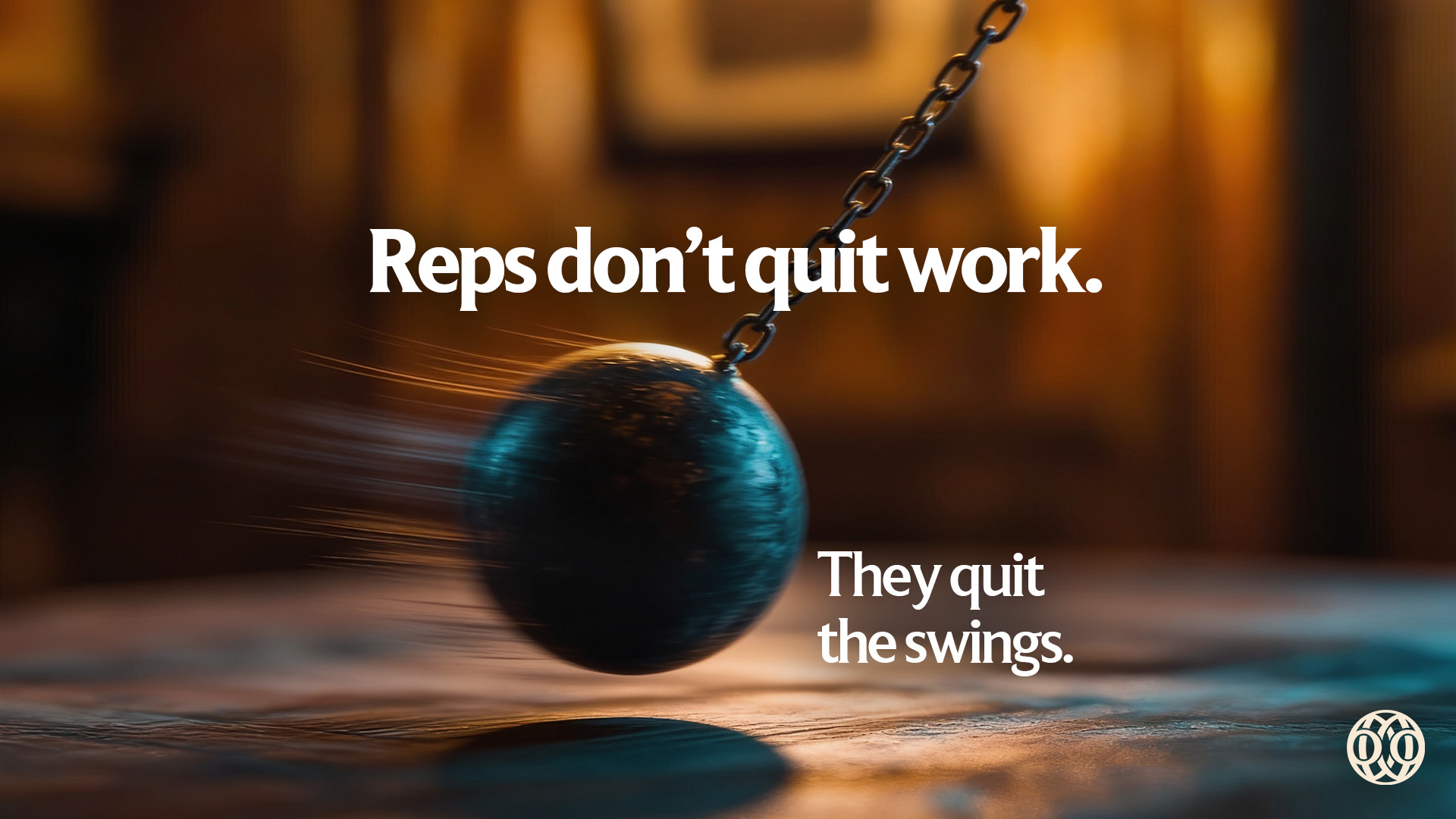
The best sales rep you have is probably the most at risk.
Not because the work is too hard. Because the environment makes the work harder than it needs to be. Talented, committed people can absorb an enormous amount of pressure. But they cannot absorb indefinite inconsistency.
And in a team led by a reactive, emotionally unpredictable leader, inconsistency is the permanent condition.
This is the burnout pattern that sales leadership in the UK rarely examines honestly.
The conversation about burnt-out reps almost always focuses on the individual; their resilience, their mindset, their ability to handle rejection.
It rarely focuses on the environment that is burning them out.
What Reactive Sales Leadership Actually Costs
A reactive leader is one who manages by response rather than by standard. When numbers are up, the environment is positive. When numbers are down, the environment becomes tense, critical, or erratic. The team learns, very quickly, that the emotional temperature of the workplace is determined by last week’s results. And not by a consistent standard that exists independently of performance.
This creates a specific kind of exhaustion that has nothing to do with the volume of work. It is the exhaustion of not knowing what to expect. Of walking into a Monday morning meeting unsure whether the leader will be encouraging or disappointed. Before you know it, you’re working in an environment where the rules shift depending on the mood.
High-performing reps find this intolerable. They are used to operating with certainty. And they need a clear standard to push against. When that standard is inconsistent, they cannot calibrate. Eventually, they just stop trying.
Inconsistent Standards Drain the Best People First
There is a counterintuitive pattern in underperforming sales teams: the people who leave first are rarely the weakest performers. They are the ones with options.
A rep who has already demonstrated they can perform experiences inconsistent leadership as a fundamental incompatibility.
They are trying to build something. The environment is making that harder, not easier. And because they are good enough to get another offer, they take it.
What remains is a team of people who either cannot leave or have lowered their own standards to match the environment. And neither produces the results any sales leader is looking for.
The irony is that reactive leaders often blame attrition on the market, on compensation, on the reps themselves. The variable they rarely examine is the one they control. Which is the consistency and quality of their own leadership.
Emotional Management Is a Professional Skill
The framing of emotional management as a soft skill has done significant damage to how sales leadership develops in practice.
It implies that emotional control is a personality trait; something you either have or you don’t, rather than a professional discipline that can be built deliberately.
Elite sales leaders do not have fewer difficult emotions than average leaders. They have a more developed capacity to manage the expression of those emotions in a professional context. They understand that their internal state is external information to their team, and they take responsibility for what they broadcast.
This is not about performing positivity. It is about understanding that certainty — not enthusiasm, not motivation, but genuine certainty about the direction and the standard — is the most stabilising thing a leader can offer their team.
And that certainty has to exist independently of last week’s numbers.
The Standard That Protects the Team
The antidote to reactive leadership is not softer management. It is a clearer, more consistent standard.
A standard that exists independent of results. One that defines how the team operates, how conversations are run, how performance is reviewed. And that does not change based on whether it was a good week or a bad one.
This standard is what gives high performers something to anchor to. It’s the same standard that makes the environment predictable enough to sustain high effort over time.
Good reps do not burn out from hard work. They burn out from working hard in an environment that does not reward consistency with consistency in return.
The leader who wants to retain their best people does not need to reduce the pressure. They need to make the pressure feel purposeful.
And that starts with being the most consistent person in the room.
READ: The #1 Reason Your Sales Performance Drops After a Good Week
I’m Roel Mojico and I’ve spent over a decade in the UK’s sales industry; first running large-scale direct sales operations, then transitioning into consultancy.
My work helps sales leaders build conviction-based sales cultures that scale without burning out.