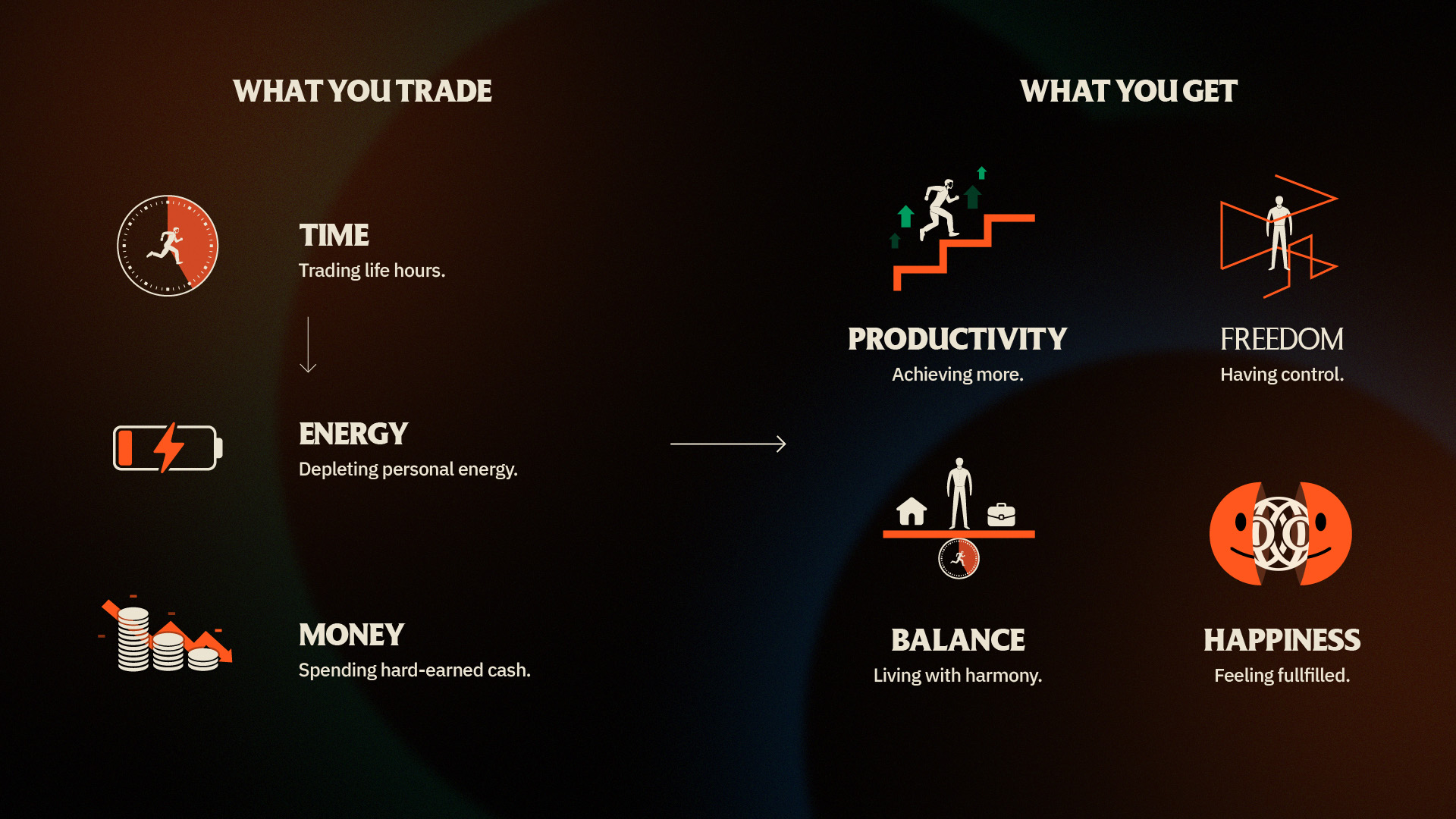
Founders chase scale, but few build a business that actually gives them time back. If you want to reclaim your time, stop letting the company run on your constant presence.
Many 6-figure founders are working 70 hours a week just to keep the machine running. The schedule feels necessary because the business depends on their presence. When the founder steps away, performance drops and problems start stacking up.
The 72-Hour Work Week Is a Structural Problem
Founders often believe long hours are the cost of growth. In reality, long hours usually signal that the business has been built around the founder instead of around systems.
Most companies start this way. The founder is the best closer, the best problem solver, and the person who understands the product better than anyone else. As the company grows, the structure does not evolve at the same pace.
The result is predictable. Every decision flows through one person. Every problem lands on the founder’s desk. Revenue grows, but so does operational pressure.
When the structure depends on the founder’s constant involvement, time freedom disappears.
The Activities That Actually Move Revenue
Buying back your time starts with identifying what truly drives results in the business.
Every company has a small group of activities that create the majority of revenue. Strategic decisions, key conversations, leadership development, and high-level sales moments shape the direction of the company.
Everything else supports those outcomes.
Many founders spend most of their week buried in admin, unnecessary meetings, and operational problems that should never reach them. These tasks fill the calendar but rarely move the company forward.
The founders who scale are the ones who focus their time on the actions that produce the biggest impact.
A 3-Step Framework to Buy Back Your Time
Founders regain control of their schedule when the business stops depending on their constant presence. That shift begins with a few structural changes.
Step 1: Identify the 20 percent that drives revenue.
Find the activities that directly generate profit. These are usually key sales conversations, strategic decisions, and leadership development. Protect these in your calendar.
Step 2: Remove yourself from low-leverage work.
Admin, follow-ups, and routine tasks consume most founder schedules. Assign ownership and implement simple processes so the work continues without your involvement.
Step 3: Build systems that sustain performance.
Document how the business runs. Sales processes, meetings, and reporting should follow clear structures that allow the team to execute without constant supervision.
When these steps are in place, the company becomes more stable. The founder begins to buy back time because the structure carries the weight of performance.
RELATED: Mindset Development Ends the Hustle Cage
Scaling your business should increase your freedom, not eliminate it.
The founders who reach the next level are the ones who redesign how their company operates.
I am Roel Mojico and I’ve spent the last decade leading businesses and sales teams all across the UK and beyond.
If you are ready to build a business that produces results without demanding every hour of your day, start buying back your time here: you.roelmoji.co