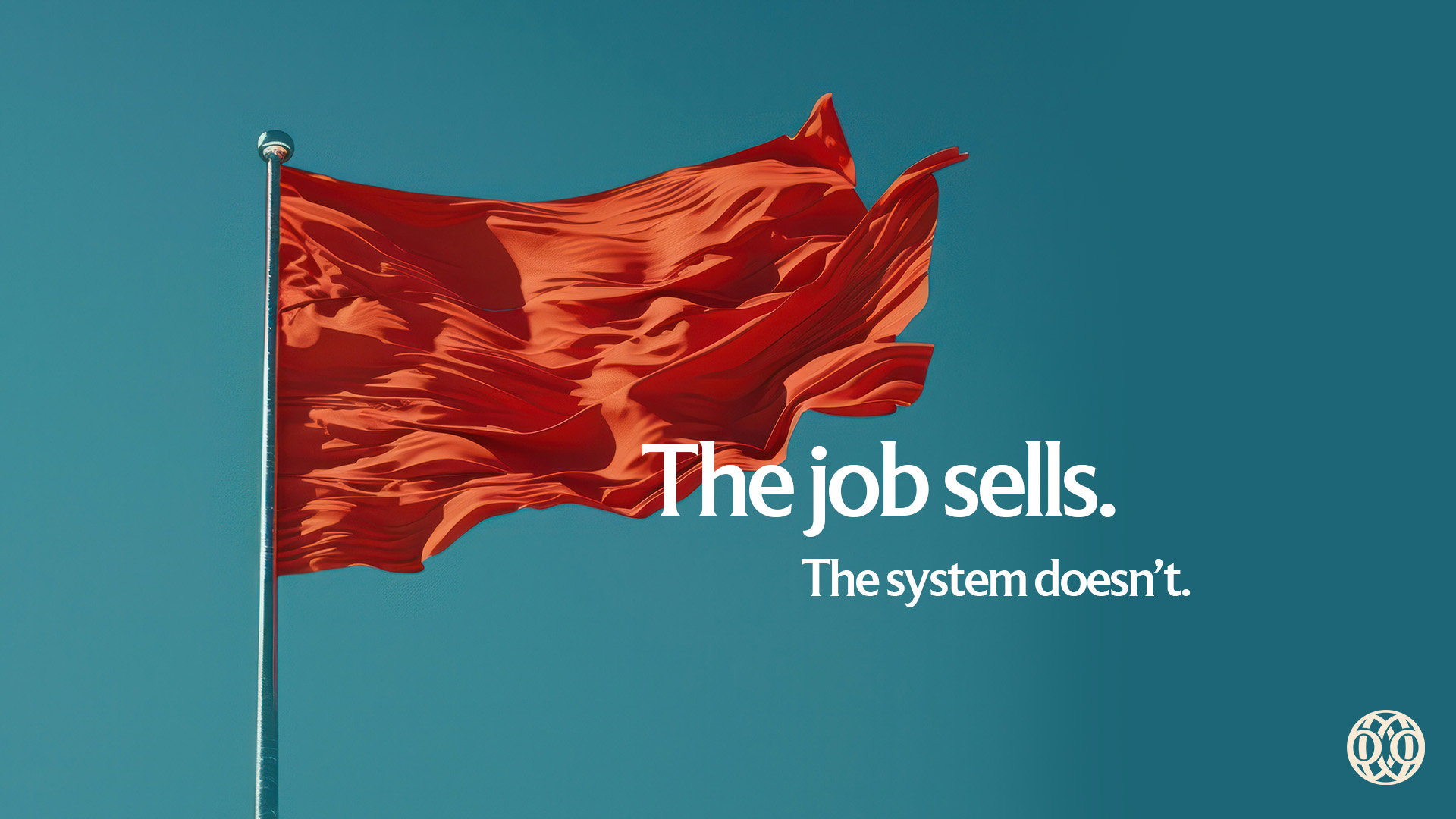
Most UK sales jobs don’t fail because of pressure. They fail because there’s no structure underneath it.
A lot of companies know how to sell the opportunity. Very few know how to build an environment that sustains performance once someone joins.
The Language Behind Sales Jobs Descriptions
Most toxic sales environments expose themselves before the interview even happens.
“Work hard, play hard.” “Unlimited earning potential.” “Must thrive under pressure.” None of these phrases are automatically bad. The problem is what’s missing around them.
No leadership development. No onboarding structure. No coaching standards. No operational clarity.
Weak companies rely on emotional pressure because there’s nothing stable underneath it. Everything runs on urgency, personality, and reaction.
Strong sales environments operate differently. Standards are clear. Expectations are measurable. Performance doesn’t rely on motivation because the structure already exists. This is what it should look like when looking for a UK sales job.
Why Sales Reps Ignore the Red Flags in Job Descriptions
Most reps walk into interviews trying to impress the company. That’s usually where the mistake starts.
They hear “high-performance environment” and assume ambition. They hear “fast-paced culture” and assume growth. In reality, a lot of these UK sales jobs are simply under-managed.
Pressure without leadership eventually becomes burnout. The rep absorbs the instability that the business failed to solve operationally.
This is why some companies constantly hire but rarely retain strong people.
READ: The Truth About Commission-Based Sales Jobs in the UK
What You Should Actually Look For in UK Sales Jobs
Strong sales environments are usually calm, operationally. Everyone knows the standard. Everyone knows what gets measured. Everyone knows how performance improves.
Ask how underperformance gets handled. Ask how leaders are developed internally. Ask how long their top performers stay.
Weak organizations become reactive when questioned because everything underneath the surface is reactive, too. Strong organizations answer directly because the systems already exist.
The best sales cultures rarely feel chaotic. Chaos does not scale.
If Every Sales Role Starts Feeling the Same
If every company promises “high performance” but every environment ends up chaotic, the problem usually isn’t bad luck. You’re probably walking into businesses that sell pressure before they build structure. And eventually, the rep becomes the system holding everything together.
I’m Roel Mojico, and I’ve spent over a decade building and leading successful sales teams across the UK.
If you want to avoid reactive sales environments and build sustainable long-term performance, I’ll show you how here.