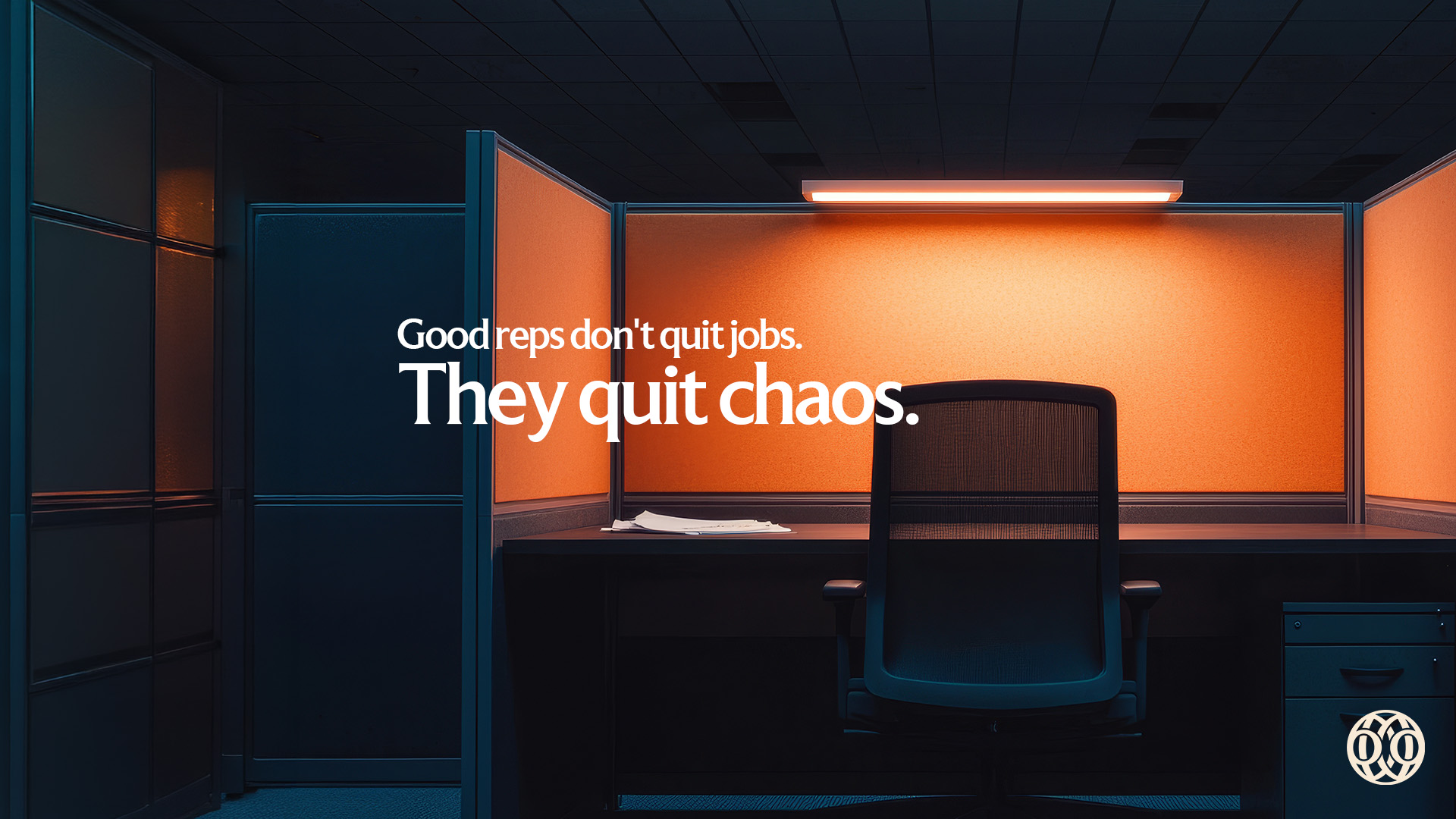
Most sales rep retention problems start long before a resignation email appears. They start during recruitment, onboarding, and the first few weeks, where standards are either clarified or quietly ignored.
A lot of companies hire for energy, then onboard with chaos. They give new reps a script, a CRM login, and pressure to perform fast. But without a clear sales philosophy behind the environment, good people leave before they ever fully buy into the team.
Your Onboarding Process Is Teaching More Than Your Training
The first 90 days tell a rep what your company actually values.
If onboarding feels reactive, disorganized, or inconsistent, your culture becomes reactive, disorganized, and inconsistent. People don’t scale inside uncertainty for very long. Especially high performers.
Strong sales rep retention comes from operational alignment early. The rep needs to understand how the company sells, why standards exist, how leadership communicates under pressure, and what “good” actually looks like inside the business.
Most teams skip this part because they confuse information with leadership. A script explains what to say. Philosophy explains how to think under pressure when the script stops working.
READ: Your 6-Figure Business Isn’t Growing for a Reason
Good Reps Usually Leave Leadership Problems
Most reps don’t leave because the work is hard. They leave because the environment becomes exhausting to trust.
One week, the standard matters. The next week, leadership bends it to save numbers. Meetings change depending on pressure. Expectations shift depending on mood. Good reps notice that quickly.
A lot of businesses say they want high performers, but they onboard people into inconsistency. No structure. No leadership identity. No real sales philosophy behind the operation.
Strong sales rep retention comes from stability under pressure. When reps trust the standard, performance compounds naturally.
How To Improve Sales Rep Retention From Day 1
Most companies onboard reps by teaching scripts, pitches, and targets immediately.
But good reps need to understand the environment first. How the team communicates. How leaders handle pressure. What standards actually matter. What behaviour gets respected inside the business.
Strong sales rep retention usually starts with a few simple things:
- Clear expectations from Day 1
- Consistent leadership behaviour
- Structured onboarding
- A sales philosophy that the whole team follows
If onboarding only teaches activity, reps burn out quickly. If onboarding teaches structure, people stay long enough to grow.
I’m Roel Mojico, and I’ve spent over a decade building and leading sales teams across the UK.
I work with founders on retention systems that protect them from the most expensive problem in sales: losing good reps after spending months training them.
If you want to improve sales rep retention by building stronger onboarding systems, leadership standards, and a scalable sales culture, I’ll show you how here.